A camera on the motorway does not stop you. The car is photographed, the fine goes to the registered owner, and for a rental car the owner is the rental company. Under Spanish traffic law, though, the person responsible for an offence in a short-term rental is the renter. So the fine comes back to you, sometimes weeks after you have returned the car and flown home. Here is how that works, what it costs and where to check the cameras before you drive. [S1]
Who pays a fine on a rental car
Spain’s traffic law (Real Decreto Legislativo 6/2015) is direct about it: with short-term rental companies, the renter is responsible for the offence. When the vehicle is not stopped on the spot, as with any camera, the owner has 20 calendar days to identify the driver, and the procedure is then opened against that person. [S1]
In practice this is what happens with our cars:
- The notice reaches MandryCabrio as the registered owner.
- We identify the driver to the authority from the signed rental agreement. Our terms say we use your documents and contact details for exactly this purpose. [S2]
- The fine is then addressed to you at the home address you gave us when booking. [S2]
Our rental terms (section 15) state that all traffic, parking and other administrative fines incurred during the rental are paid by the renter, including fines that arrive after the rental has ended, and that an administrative fee may be charged for processing a fine and identifying the driver. The deposit can also be retained, in whole or in part, for unpaid traffic fines. [S2] If you want to understand how the deposit itself works, our guide to renting a convertible without deposit stress explains it step by step.
Who issues the fine
On interurban roads such as the TF-1 and TF-5 motorways, fines are imposed by the provincial Head of Traffic (Jefatura Provincial de Tráfico, part of the DGT). On urban streets the town hall is responsible. [S1] For you, that means a camera fine on the motorway and a parking ticket in a town can come from two different authorities, on different paper, at different times.
How much a speeding fine costs
For speeding caught by a camera, the law has a fixed table. Two columns from it cover most holiday driving: [S1]
| Limit 50 km/h (towns) | Limit 120 km/h (motorway) | Fine | Points |
|---|---|---|---|
| 51–70 km/h | 121–150 km/h | €100 | 0 |
| 71–80 km/h | 151–170 km/h | €300 | 2 |
| 81–90 km/h | 171–180 km/h | €400 | 4 |
| 91–100 km/h | 181–190 km/h | €500 | 6 |
| 101 km/h and over | 191 km/h and over | €600 | 6 |
The same table covers every limit from 20 to 130 km/h, so check the line for the sign you actually passed. Many roads on the island have limits well below 120.
The 50% reduction. If you pay voluntarily within 20 calendar days from the day after you are notified, the fine is cut by half. The catch: paying early means giving up any appeal, and the procedure ends on the day you pay. [S1] If you believe the fine is wrong, do not pay it early; contest it first.
Fines that cannot be delivered can also be published on TESTRA, the DGT’s official noticeboard for traffic fines. [S1] An unanswered notice does not quietly disappear.
Where the speed cameras are
For speed-camera information, use the DGT’s official “Equipos y tramos de vigilancia” page, which links to its list of speed-control points and sections. Use the DGT traffic map for road conditions and incidents before your trip. These information services do not replace road signs: always follow the posted speed limits. [S3]
A few habits that keep you out of the table above:
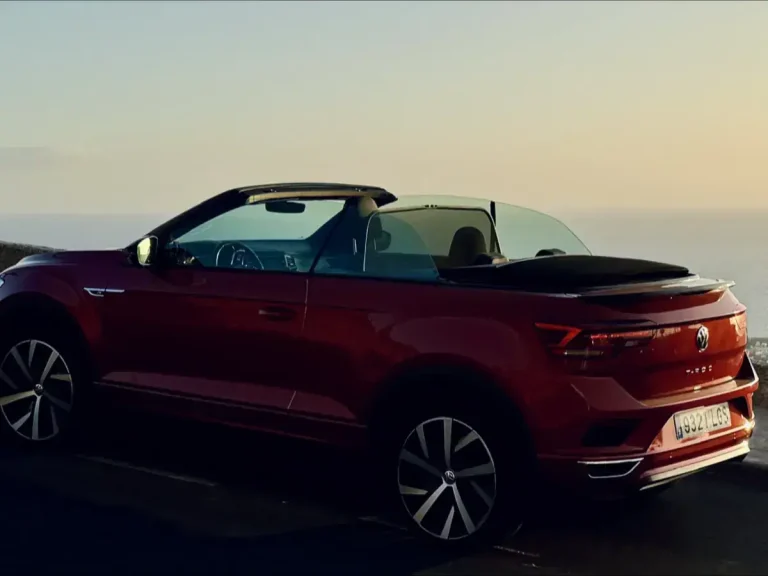
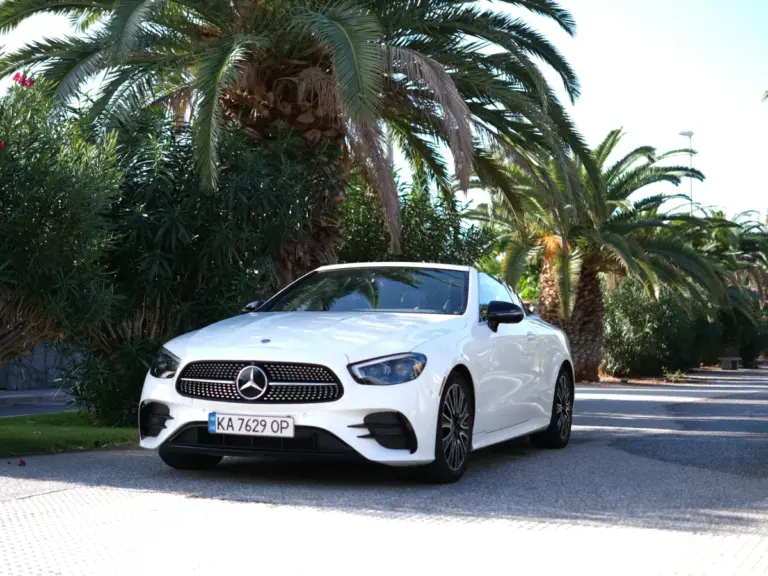
- Use the cruise control or limiter. On the long motorway sections between the south and the north, a set speed is easier than watching the needle. The Mercedes-Benz E450 Cabriolet, the Volkswagen T-Roc Cabriolet R-Line and the Audi A5 Cabriolet all list adaptive cruise control. [S4][S5][S6]
- Watch the drop at town entrances. The motorway feeds into roundabouts and town streets quickly; the limit changes before you see the first house.
- Do not chase the sat-nav arrival time. Mountain roads take longer than the kilometres suggest, and a rushed schedule is how people end up speeding on the way back to catch a dinner booking.
If this is your first time driving on the island, read driving in Tenerife for the first time before you set off.
What to do if a fine arrives
- Read the notice and the deadline. The 20 days for the 50% reduction run from the day after notification. [S1]
- Check the details against your rental. Date, time, place and plate should match your rental period and car. Keep a copy of your rental agreement until well after the trip.
- Contact us if something does not add up. We have the contract and can confirm the dates.
- Budget for it. A fine is a cost of the trip like fuel or parking. Our guide to car hire costs in Tenerife shows how to build a realistic total.
Browse the cabriolet fleet when you are ready to book; the rules above apply to every car on the island, whoever rents it out.
FAQ
Can a speeding fine reach me after I return the rental car?
Yes. Our terms say fines incurred during the rental are paid by the renter even if they arrive after the rental ends, and the law makes the renter responsible in short-term rentals. [S1][S2]
Does the rental company pay the fine and charge my card?
Under Spanish law the company identifies you as the responsible driver, and the fine is then addressed to you. An administrative fee for that processing may be charged under our terms, and the deposit may be retained for unpaid fines. [S1][S2]
How much is a speeding fine in Spain?
For camera-detected speeding the fixed table runs from €100 (no points) to €600 (6 points), depending on the limit and how far over it you were. Paying within 20 days halves the fine but ends the right to appeal. [S1]
Where can I see the speed cameras in Tenerife?
Use the DGT’s official page for speed-control points and sections, and its traffic map for road conditions. Always follow the posted limits. [S3]
Sources (checked 2026-10-09)
- [S1] BOE: Real Decreto Legislativo 6/2015, Ley sobre Tráfico, Circulación de Vehículos a Motor y Seguridad Vial (consolidated) — art. 82(e) renter responsible in short-term rental; art. 84 competence (Jefe Provincial de Tráfico on interurban roads, mayors on urban roads); art. 92 TESTRA; art. 93 20 days to identify the driver; art. 94 50% reduction within 20 calendar days, waiver of allegations; Annex IV camera speeding table.
- [S2] MandryCabrio rental terms (last updated 5 August 2026) — s.3 home address required; s.7 deposit may be retained for unpaid traffic fines; s.15 fines paid by the renter incl. after the rental, administrative fee may be charged; s.19 data used to identify the driver.
- [S3] DGT speed-control points and sections; DGT traffic map (etraffic) — official DGT radar-information page and traffic map; links and descriptions checked 22 October 2026.
- [S4] Mercedes-Benz E450 MHEV Cabriolet page — adaptive cruise control listed.
- [S5] Volkswagen T-Roc Cabriolet R-Line page — adaptive cruise control listed.
- [S6] Audi A5 Cabriolet page — adaptive cruise control listed.